Wednesday, May 9, 2012
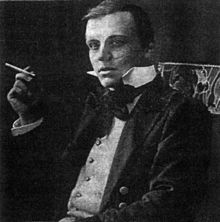
THE CENTURY'S BEST HORROR FICTION #20: A review of "In the Light of the Red Lamp" by Maurice Level
Level is mostly known for a handful of ghastly stories that were eventually acted out on stage in the tradition of the Grand Guignol. Some of his work is said to have inspired the splatterpunk writers of the ‘Eighties. Yet . . . Pelan seems to have chosen the wrong work to display in this collection.
The story is simple. Too simple. The unnamed narrator (noticing a trend?) is a friend of a fellow (curiously, also unnamed) who has recently lost his beloved wife. On the night that she died, so he could always remember what she looked like, he took a photograph of her body. However, grief-stricken, he doesn’t have the strength to have it developed. Now that his friend, the narrator, is in his presence, he feels that he can keep it together long enough to develop the picture on the frame. When he finally takes the photograph out of the developing chemicals and looks at it under the titular red lamp, he is horrified by a sudden discovery.
SPOILER ALERT: The story depends on the twist at the end, which is that he buried his wife alive. He discovers in the photograph that her eyes had moved, which he hadn’t noticed in real life. This calls to mind some of Poe’s classics of being buried alive, but here it just seems to fall flat. In Poe, the tension is tuned up so much it’s a relief to reach the end. In Level, it seems kind of . . . blah. It’s not that the suspense fails—he does very well at building up to the ending—but it’s the result itself. We sat on the edge of our seats for this?! END OF SPOILERS.
So it’s not up to par with what could be considered a great horror story of the 20th Century. Yet, it is short. Why not give it a glance?
[Pelan cheated a little with this one. It originally appeared in Le Journal in 1906. However, it first appeared in English in 1920 in BLACK MASK. It can be read here.]
Tuesday, May 8, 2012
THE CENTURY'S BEST HORROR FICTION #19: A review of "The Sumach" by Ulric Daubeny
This is one of the more unusual tales in this volume, in that it deals with something that not many people have covered in their fiction. Here we have our first (and possibly only) vampire tree.
This is the story of poor Irene, who has just moved into Cleeve Grange, a mansion left to her in the will of her cousin Geraldine. On this property is a mysterious tree. She feels drawn to it, yet at the same time she’s repulsed by the birds that seem to die around this tree. May, her friend, is disturbed by the tree. Not only are the dead birds off-putting, so is the fact that the family dog is buried at its base, to say nothing of Geraldine’s obsession with the tree mere days before she died of anemia.
Soon, Irene finds herself just as obsessed. She can’t help but sit among the branches, even though at one point she “fantasizes” about it closing around her, suckling at her skin. The next day, there is a mark on her, an open wound.
May sees this and is horrified. She fetches the doctor, who diagnoses Irene with anemia. That’s right, just like Geraldine. Suddenly, the tree seems a lot more sinister . . . . After they discover some of Geraldine’s journal entries, May comes to the conclusion that this tree is a vampire, and it is sucking the life out of Irene.
A pretty bizarre story, no? And even though it should be silly, Daubeny makes it seem not just reasonable, but just a bit creepy. Yet there is one problem: he’s not willing to let go of the polite horror that seems to enthrall so many other authors in this volume. Even though the characters refer to each other by their first names, Daubeny is too formal. May is Mrs. Watcombe and Irene is Mrs. Barton.
SPOILER ALERT: But the most interesting part of the story is how the vampire tree came to be. Apparently, thirty years ago, someone staked an actual vampire here and buried it with a mouthful of garlic. The stake wasn’t quite dead, and a tree grew from it, the sumach. The perfect final touch is when they cut the tree down and burn it. Thereafter, the only plant they can get to grow there is garlic. END OF SPOILERS.
Is this a great horror story? Maybe. But it certainly sticks out like the proverbial sore thumb. Read it for the curiosity it is. It will stick with you for quite some time.
[This story first appeared in THE ELEMENTAL, pictured above as there was no author's photo available, and can be read here.]
Monday, May 7, 2012
THE CENTURY'S BEST HORROR FICTION #18: A review of "The Middle Bedroom" by H. de Vere Stacpoole
Ladies and gentlemen, we have our first stinker. Of all the stories that have rated with a lot of cons, they’ve at least had a few pros. This is the first with ZERO PROS.
The story itself isn’t even worth going over. Imagine a ghost story, and you’ve got it in your head. The main problem is the way the story is told: WHY GO TO SUCH GREAT LENGTHS TO TELL A TALE USING AWFUL DIALECT?! No fooling, this story is told in a terrible dialect that does nothing but make the tale a joke. That’s right, A JOKE. Stacpoole, who is best known for THE BLUE LAGOON, has no respect for the genre. There aren’t a lot of horror stories attributed to him, which is a bad sign already. But he has no control over the kind of story this should have been.
Here’s the finest example. On the second page, Stacpoole introduces a very intriguing character by the name of Doubleday. Check out this description he gives of the fellow: “Doubleday didn’t believe in ghosts nor care about them. Snipe was his game—and cock. He was a two-bottle man—it was in 1863—and if he had met with a ghost any time after ten o’clock he would scarcely have seen it, or seeing it, would not have cared.”
WHY IS HE NOT OUR PROTAGONIST?! That guy sounds like a splendid character, yet the story glosses him over and talks about someone else entirely. Without a doubt, “The Middle Bedroom” would have been a thousand times better if Stacpoole had used him instead of completely ignoring him.
All right, there is one teeny, tiny part that is kind of cool: the guy who built the haunted house in question was nicknamed the Spider. That sounds very cool, but he doesn’t earn his sobriquet. And he has nothing to do with the pulp hero, the Spider. Nope. There’s nothing but awful here. Skip it.
[There is a surprising lack of information on Stacpoole, despite the fact that he wrote something big like THE BLUE LAGOON. As a result, I couldn't, for the life of me, find where this story was first published. Also, there is no place online where you can read it.]
Sunday, May 6, 2012
THE CENTURY'S BEST HORROR FICTION: A review of "The Black Pool" by Frederick Stuart Greene
So far we have had a lot of polite horror. Nothing too violent happens, and if there is some unpleasantness, it tends to be implied rather than depicted. With “The Black Pool,” things change. In fact, it’s very much clear that his kind of fiction is the precursor for TALES FROM THE CRYPT and other EC books. Greene is not afraid to get his hands dirty. Actually, as the story goes, his work was considered too extreme for his time, so he self published this tale, among others, in one volume.
Meet the Van Norden family. The Judge and his wife have just had sons, a set of twins so identical that no one but Mrs. Van Norden can tell them apart. Everyone else has to wait for them to talk. Schuyler is the hot-headed one, a very fiery sort of fellow. Allan is much more laid back, he thinks things through, and he’s a very deliberate kind of guy.
Naturally, a girl causes a rift to open between them. Up until they meet Marion Reid, they are the closest friends one can imagine. Allan is willing to kill an acquaintance when said acquaintance accuses Schuyler of cheating at cards in a rather gruesome (for the day) scene. But this young woman changes everything. Allan sees how smitten his brother is with her, but he wants her for himself. Ever the honest man, Allan takes Schuyler aside and demands that any contest for her hand in marriage should be an open and fair fight. Right off the bat, Schuyler lies and says he’s not in love with her.
Allan emerges as the clear winner, and anyone with half a brain can figure out what’s going to happen next. Allan is called away out of town for an emergency, and he asks his brother to tell Marion what happened. As soon as Allan is gone, Schuyler rushes out to meet with Marion, but not before he practices Allan’s voice a little. He’s got to be perfect, considering how Marion is the only one aside from their mother who can tell the twins apart.
Allan returns only to discover that Marion never thought he was gone. When she makes a comment that is very easily construed to mean that she had made love to “Allan” when Allan was out of town, the more deliberate twin suddenly realizes what has happened. He decides not to tell Marion about it, and instead chooses to plot revenge against his brother.
After coming up with a foolproof plan, Allan tricks his brother out to the Black Pool, a pond on their property that is so black it perfectly reflects everything on its surface. After manipulating Schuyler into wearing himself out (so he wouldn’t be so physically formidable), Allan ruthlessly drowns his twin. It is possibly the most graphic depiction of one man drowning another ever put to paper, and it’s made all the creepier because of the reflective surface, seeing as how they look exactly alike.
But that’s not the end of this vicious little tale. SPOILER ALERT: Allan manages to make it all look like an accident, and a while later, Marion dies giving birth to their daughter. However, Allan wonders whose baby it really is. He can’t figure it out because every feature Schuyler had, Allan has. He finds himself hating the child and even stares daggers into his own reflection while shaving. He hates Schuyler more than anyone he has ever met, and he can’t escape the image of the bastard. In a fit of lunacy, he rushes out to the Black Pool and sees his reflection in the surface. He takes this to mean that Schuyler is back from the dead, and he intends to murder him yet again. He jumps into the Black Pool only to drown himself accidentally. END OF SPOILERS.
Pretty cool, eh? It also seems like a turning point for the horror genre. While the voice itself is still a bit archaic, it’s inching closer to becoming something a modern audience can identify with. The characters are much more fleshed out. Here we finally start to leave polite horror behind. If you consider yourself a connoisseur of the horror genre and you haven’t read this, you need to rectify that immediately.
[This story originally appeared in THE GRIM THIRTEEN and can be read here.]
Saturday, May 5, 2012
THE CENTURY'S BEST HORROR FICTION #16: A review of "Thirteen at Table" by Lord Dunsany
Once more, we have an example of a great writer falling short of the mark. This is not Dunsany’s best. It’s even kind of a hard slog at first, as he’s a card-carrying member of the Machen/Blackwood school of overdoing the setting of a scene.
This is the story of an unnamed narrator going on a fox hunting trip, hounds and all. When it seems that the fox is getting the better of him, and it’s getting too late, the narrator decides to stop by a nearby manor to spend the night (leaving his servant and dogs outside, of course). The owner of the place, Sir Richard, seems a bit off. He’s as much of a hermit as a man can be while still employing a butler. He very reluctantly allows the narrator to stay the night and even invites him to dinner.
That’s when things get weird. There are fourteen places set for just two people. Then, the door starts opening on its own, and Sir Richard starts introducing the narrator to women who clearly aren’t there. The narrator wants to be a gracious guest, so he decides to play along with Sir Richard’s lunacy to the point of actually having conversations with the invisible ladies. However, as he gets drunker and drunker, he starts imagining that these women are actually there.
The main problem with this story is that it takes sooooooo long to get to the point, and since it’s one of the shorter tales in this book, that’s a bad sign. Dunsany loses himself in describing the fox hunt so much that it’s like he has to remind himself to get on to the horror part of this horror story.
However, once we get to Sir Richard’s manor, things stick together. By the point we meet the women who aren’t there, we’re hooked. It’s just such a wonderfully bizarre situation, one can’t help but be interested in finding out why this is happening.
But Dunsany leaves one string dangling, and it’s almost irritating enough to make this a bad story. Sir Richard tells us that he has wronged each and every one of these women, but he never explains why. Imagine the tale that lurks between those lines!
SPOILER ALERT: Here’s where Dunsany fumbles again. He makes it explicitly clear that these really are ghosts and not figments of Sir Richard’s imagination. The narrator, drunk and in full swing of the dinner party, tells an off-color joke, and the room just turns against him. It’s so bad that the ghostly ladies get up to leave. He tries desperately to apologize (because he’s too much of a gentleman to have intended to be a bad guest), but he’s so drunk he collapses. The next thing he knows, he’s waking up in bed. He goes down to apologize to Sir Richard at lunch (or, in the narrator’s case, breakfast) only to be told that an apology wasn’t necessary. Sir Richard is glad that they’re gone. “We have been thirteen at table for thirty years and I never dared to insult them because I had wronged them all, and now you have done it and I know they will never dine here again.”
That’s another problem. The stakes weren’t very high in this story. There is no danger to anyone. In a horror tale, there has to be some element of risk. Otherwise, why are you afraid for the characters? A prime example of danger is “The Spider.” There is nothing here in “Thirteen at Table.” END OF SPOILERS.
This is not the weakest of the book, but it’s pretty watered down. Is it worth reading? For the dinner party scene alone, yes. Absolutely. But don’t expect much more out of it.
[This story first appeared in TALES OF WONDER and can be read here.]
Friday, May 4, 2012
THE CENTURY'S BEST HORROR FICTION #15: A review of "The Spider" by Hanns Heinz Ewers
Even though there have been a number of stories purposely vague so far in this volume, this is the first to go one step beyond that and rely on subtlety to get its point across. There is nothing scary happening on the surface of this story. Everything meant to creep the reader out is between the lines.
This is the tale of a hotel located at 6 Alfred Stevens Street, room 7. There have been a series of suicides by hanging—three to be exact—and they go out the same way, from the same beam, the same hook, and the same cord, and they die on consecutive Fridays, all at six o’clock. None of them were suicidal in the slightest. In fact, the third was a police officer investigating the deaths, only to become a victim himself.
Enter student Richard Bracquemont. He’s not afraid of anything—in fact, he pulls a scam on the constable and the woman who runs the hotel in order to get the room—and while he’s intent on solving this mystery, he’s also focused on using this time to study. As he does so, he is constantly bothered by everyone who wants to know if he's all right, especially on the dreaded Friday.
Yet, somehow he survives this Friday, and the next, as well. In the meantime, something, or rather someone, has caught his interest. He gives up on both mystery and studies because he has fallen in love with the woman across the alley from his window. She sits at her own window, spinning something on a spindle. At first, they merely acknowledged each other, but soon they have developed a game in which she imitates every movement he makes. Before long, he devotes much of his time to coming up with complicated gestures for her to mirror, and she always does an excellent job. Before long, they are blowing kisses to each other.
Doesn’t sound very scary, does it? In fact, only the first part sounds like a horror story. But if you haven’t surmised what is going on by this point, perhaps you’re unfamiliar with how seemingly normal things can take on insidious meanings in horror fiction.
SPOILER ALERT: As unfortunate as it is, this story probably seemed more frightening to people in 1915. Modern readers would understand what is going on right away, especially when Bracquemont mentions the spiders. On the window through which he usually contacts Clarimonde, the woman in question, he sees a giant spider web. There are two spiders on it, one male and one female. The male seems frightened of his mate, and somehow the female manages to seduce the male into coming back to her after he tries to run away. There is a weird hypnotic thing going on between them, and finally, when he realizes the danger he’s in, he tries to flee again. The female catches him, wraps him up, and sucks the life out of him.
Predictably, that is exactly what is happening between Clarimonde and Bracquemont. Before long, he recognizes that it is not she who is imitating him, but he who is imitating she. She is exerting some kind of mental domination over him, and naturally this leads to his suicide by hanging on Friday, at the predictable time of six o’clock. END OF SPOILERS.
Sometimes, the finest horror fiction exploits the very basic human fear of being unable to control oneself. This is the finest example of that kind of tale. It’s a shame that Ewers is practically forgotten today. Once again, a big thank you to Mr. Pelan for aiding in the continued survival of a master of horror.
[This is not confirmed, as it is very difficult to find this information, but I think this story might have first appeared in a magazine called ZEITGEIST. However, during my research, I found out a lot of interesting things about Ewers. For example, he was an early member of the Nazi party, despite the fact that he was not anti-Semetic. In addition to that, he was also gay (another big no-no for a Nazi) and a Satanist who liked hanging out with Aleister Crowley. As a result of this, his work was banned in Germany, and his property was seized by the Nazis. He died destitute of TB. In addtion to all of this, he was also a nudist and a cabaret performer. Quite the lively fellow, no? He also wrote an interesting book about using a hanged man's cum to impregnate a prostitue, who gives birth to a crazy woman with a bad murder habit. Ewers was waaaaay ahead of his time. Anyway, "The Spider" can be read here.]
Thursday, May 3, 2012
C2E2 INTERVIEW: JON LENNON AND LEO PEREZ
JOHN BRUNI: Here we are at C2E2 with Leo Perez and Jon Lennon. Hi guys.
JON LENNON: Hello.
LEO PEREZ: Hey, what’s going on?
JB: First of all, Leo, how fucking hard are you to be here today?
LP: How hard am I to be here?
JB: How erect?
LP: I’m pretty erect. I’m at the full four-and-a-half. Well, it’s four-and-a-half, but at least it’s seven inches wide. It’s a fucking chode. I’m in full-chode mode today.
JL: I’m kind of recessed right now. It was harder yesterday.
[First of many interruptions, but this one is a productive one. Jon is selling a book.]
JB: Leo, how long have you wanted to be in the comic book industry?
LP: I’ve probably wanted to be a comic book artist since I was nine years old, when I knew that comic books were made by regular people, not gods. I’ve only been with Jon for a year. This is my first C2E2 as a creator, and it’s surreal. Pinch me, I might be dreaming, you know?
JB: How do things look from behind this table?
LP: I’ve already been at Wizard World and a couple of other conventions, too. Being back here is almost the same, except it’s different. It feels like we’re at the big one. There’s definitely some nervousness. I want people to come by and love our stuff. It’s different. In a good way.
JB: You and Cliff Breaux used to do a strip called Horace the Hippo—
LP: Ah yes, Horace.
JB: Are there going to be any more of those?
LP: We talk about it here and there. We wanted to change the format a bit. Go color. Go longer. I think as long as we can come up with good stories together, we will see Horace the Hippo back. But I will give you this little spoiler nugget: I’m working on a Burley McBloodstone story. It’s a 24-page Burley McBloodstone story for CheeseLord Comics. I haven’t told Jon yet about it. Not now, but in the near future, a couple of years. I am working on my own four or five issue story to be collected in a graphic novel. Jon’s working on one, too.
JL: Don’t speak for me, you son of a bitch!
LP: I will speak for you! Anyway, with Horace, who knows what will happen with that?
JL: I have not heard talk of Horace for many a blue moon. Horace is dead to me. I unfollowed him on Twitter.
LP: Wow. He’s really dead.
JB: I take it he’ll be doing one-shots from now on?
JL: It’s a collaborative process between Leo and Cliff. Leo got interested in doing his own thing, so we’ll see what happens.
JB: Jon, what are you going to do next?
JL: Product of Society #5 is for all intents and purposes, currently the last issue in the series. Not that it couldn’t come back in the future, but it might just be a while. Like Leo said, he’s going to be working on his own project that he’s going to write and draw, and I’m going to do the same.
[Another interruption, this time just Jon wanting to make sure I wasn’t going to broadcast the interview but transcribe it instead, so I’d could make him and Leo look good.]
JL: Next, I have a few projects going on, but the main one is, I’m writing and drawing a graphic novel. It’s going to take me so long, I’m going to release it in single issue format with a low print run, just so I have something new to sell at shows. That’s what it’s about. My goal is to get the first issue done by the end of this year. It sounds far away, but I guess it’s really not. Though I’ll be dead sooner than later. It’s called THE REVELATION OF CLIVE THE CLOWN. It’s the tale of a psychotic clown-god of some kind. I’m not good at synopsis, but this is the story of a clown pushed to the edge. It opens with him at Gitmo being tortured because he’s on trial for crimes against humanity.
[Another interruption, this time Cliff Breaux, pretending to air-fuck me from behind with a rolled up poster.]
JL: I’ve been doing these anthologies and short stories for years now, and now I’m like, it’s time to shit or get off the pot and do something of length and substance. If you’re at all familiar with my work, you know it is of a surreal nature. Scatological humor. Things like that. It’s just, oh wow, just crazy Jon-ness. The premise is about this clown who is taken to Gitmo, where he tells his life story, which starts at the beginning of the universe and focuses around Clive the Clown’s misadventures in the Middle East during the Iraqi War, where he’s a military contractor. The government was shipping out prostitutes to troops to celebrate the fall of Baghdad, but Al Qaeda kidnapped the prostitutes. So Clive the Clown’s minions are called in, and they’re hot on the trail of these prostitutes. These are all broad strokes. Suffice to say, I don’t want to ruin it all for you, but we will see midgets riding dinosaurs! Fighting clowns! Time travel! Creation of human life on earth!
JB: In other words, the sequel to LOST?
JL: By the end of this comic, you will know why you’re alive. All your questions will be answered. What it means to be a human being. So, that’s what I’ll be working on next.
JB: What is your favorite position?
JL: Sexually? Doggy style. I’m traditional. I’m an ass-man myself. It’s difficult sometimes, because I like the ass-structure so much, it’s hard to hold in my jism because I’m so excited. So often during sex, you want to come after five seconds, you start thinking, all right, I’ve got to start thinking of corpses and blah blah blah, try to hold it in. If you’re with a hot chick, you have to think of an ugly chick. This is the way of life. That’s why you’ve got to find a good girl who understands that you’ve got to have that first two-three minute thing and get that out of the way so you can have a longer thing. That’s why it’s so hard when you’re with a girl the first time. You’re done in three minutes. I’m sorry, that’s how I operate. I do the quick thing, and then I’m ready for a 20-minuter. Not that I’ve had sex in many years, but anyway.
JB: I know when I think of corpses, I ejaculate.
JL: It’s not that I hate women. It’s just when they cry, it turns me on.
LP: And that’s how third grade went for Jon.
[This conversation, by the way, killed a sale for Mat Festa, whom I intended to interview along with Jon and Leo, but who was too busy actually working. Mat did sit down briefly, but when a customer came by, he went back to selling. Still, it’s pretty powerful when sex talk can kill the sale of a book. I hope Jon’s proud, that dirty fuck . . . .]
JL: What’s your favorite position, Leo?
LP: I like love . . . .
[He is very nervous at this point because his fiancé is standing on the opposite side of the table. The night of their wedding is about a month away.]
JL: That’s not an answer.
LP: I’m not going to answer that. What can I say? Lovemaking is as beautiful as two souls intertwined.
JB: Leo, getting back to the book, are you going to continue your story from the most recent PRODUCT OF SOCIETY?
LP: Yes. It may be related to the series. I don’t want to talk about things too much, because I don’t want to recant later, but we will see more of those guys and their adventures.
JL: You never did name them.
LP: Yeah, I haven’t named them. Yet. I have names for them, but I’m just keeping secrets.
[Another interruption so Jon can comment on how hot a girl is . . . and how that girl is going out with a friend of his.]
JL: Let me ask you a question, John. Fuck you, that’s what.
LP: Back to the clown story that Jon’s working on.
[Another interruption, so Jon can tell me this is a terrible interview because I’m not asking questions. I don’t have to work very hard to convince him that they are giving me exactly what I want, ie. a trainwreck of lunacy.]
LP: I think what we’re getting out of the clown story is more of Clive the Clown from that story in PRODUCT OF SOCIETY #4. People loved that story so much and loved how fucked up that clown was.
JL: Clive the Clown existed in PRODUCT OF SOCIETY #4 as a background character in another story. I’ve gotten feedback from a few people, including the interviewer and Leo and people who really enjoyed the character. It was funny to me because he initially wasn’t in the story.
[Another interruption so Jon can sell a book. Apparently, the guy offered to buy him a drink, and Jon doesn’t drink and drive, as he does indeed have to drive home after this.]
JL: Anyway, Clive the Clown was in this comic, and he was a little side character that had no purpose. He was exposition. People just responded to him because he was such a weirdo. He was just a clown who said cryptic things. After people told me they liked him, and while thinking about what I wanted to do next, I started having ideas. Once I had the thing with midgets riding dinosaurs, I was like, this is it. You have to reap the moment. This is what I’ll be remembered for.
JB: Leo, what drew you to be a part of PRODUCT OF SOCIETY?
LP: When I first met Jon, he started giving me these books. I just saw so many possibilities just showing off how fucked up I can be. Even though my story isn’t that fucked up, I think the one from part four is very fucked up because it’s about a certain interviewer who had sex with a girl who shat on him. That’s what really got me amped to do it. Once I did it, Jon said, so what’s your next plan? I said I don’t know who I’ll have to work with, and he said, why do you have to work with anyone? Aren’t you confident in your own stories? I am, but sometimes I’m not. I just went with it, I went with my gut feeling.
JL: I’m a big believer in the writer/artist. It’s what I do. With Leo, I thought he was going to do some off the wall gross out stuff, and he did a horror/comedy, which is great, too. It’s not great, but it’s okay . . . .
[Jon feels the need to clarify that he’s being sarcastic at this point.]
JB: The new PRODUCT OF SOCIETY is kind of a primer for Artist’s Alley. It’s got a lot of folks from Artist’s Alley in there. What inspired you, Jon, to come up with this anthology?
JL: I always wanted PRODUCT OF SOCIETY to be an actual anthology with multiple artists for the first few years that I did this.
[Another interruption, this time so Jon can talk to a friend.]
LP: I just want to take a second and say that it’s fucking awesome that so many of our friends and people we know from Twitter are stopping by and talking to us and making us feel good. We’ve been to cons where we were just lonely there, sitting, and it’s awesome to have everyone come by and support us and say hi.
JL: This is our home show. Well, I consider Chicago Comic Con the home show. Anyway, in the beginning, PRODUCT OF SOCIETY was just me because I didn’t know anybody when I started. Over time, I made enough friends that I finally brought in #4 and said, let’s do this as a real anthology. My only goal being to put out cool comics and give people the opportunity to not have to pay to print it themselves, I’ll just do it. With #5, it’s so awesome, so unbelievably good that anybody could buy this book and go, HOLY GOD! I DON’T EVEN HAVE TO COME TO C2E2! THIS IS ALL I NEEDED! That’s how much goodness there is in there. My ego is so satiated now. See how awesome I am to have all these cool friends that did this, I blew my fucking load, and I don’t have to do the anthology anymore. It’s all in the graphic novel now, so fuck you, interviewer!
LP: So what he’s saying is, we’ve won the Super Bowl.
JL: Yeah! Give me money!
LP: At least buy this book.
JON LENNON: Hello.
LEO PEREZ: Hey, what’s going on?
JB: First of all, Leo, how fucking hard are you to be here today?
LP: How hard am I to be here?
JB: How erect?
LP: I’m pretty erect. I’m at the full four-and-a-half. Well, it’s four-and-a-half, but at least it’s seven inches wide. It’s a fucking chode. I’m in full-chode mode today.
JL: I’m kind of recessed right now. It was harder yesterday.
[First of many interruptions, but this one is a productive one. Jon is selling a book.]
JB: Leo, how long have you wanted to be in the comic book industry?
LP: I’ve probably wanted to be a comic book artist since I was nine years old, when I knew that comic books were made by regular people, not gods. I’ve only been with Jon for a year. This is my first C2E2 as a creator, and it’s surreal. Pinch me, I might be dreaming, you know?
JB: How do things look from behind this table?
LP: I’ve already been at Wizard World and a couple of other conventions, too. Being back here is almost the same, except it’s different. It feels like we’re at the big one. There’s definitely some nervousness. I want people to come by and love our stuff. It’s different. In a good way.
JB: You and Cliff Breaux used to do a strip called Horace the Hippo—
LP: Ah yes, Horace.
JB: Are there going to be any more of those?
LP: We talk about it here and there. We wanted to change the format a bit. Go color. Go longer. I think as long as we can come up with good stories together, we will see Horace the Hippo back. But I will give you this little spoiler nugget: I’m working on a Burley McBloodstone story. It’s a 24-page Burley McBloodstone story for CheeseLord Comics. I haven’t told Jon yet about it. Not now, but in the near future, a couple of years. I am working on my own four or five issue story to be collected in a graphic novel. Jon’s working on one, too.
JL: Don’t speak for me, you son of a bitch!
LP: I will speak for you! Anyway, with Horace, who knows what will happen with that?
JL: I have not heard talk of Horace for many a blue moon. Horace is dead to me. I unfollowed him on Twitter.
LP: Wow. He’s really dead.
JB: I take it he’ll be doing one-shots from now on?
JL: It’s a collaborative process between Leo and Cliff. Leo got interested in doing his own thing, so we’ll see what happens.
JB: Jon, what are you going to do next?
JL: Product of Society #5 is for all intents and purposes, currently the last issue in the series. Not that it couldn’t come back in the future, but it might just be a while. Like Leo said, he’s going to be working on his own project that he’s going to write and draw, and I’m going to do the same.
[Another interruption, this time just Jon wanting to make sure I wasn’t going to broadcast the interview but transcribe it instead, so I’d could make him and Leo look good.]
JL: Next, I have a few projects going on, but the main one is, I’m writing and drawing a graphic novel. It’s going to take me so long, I’m going to release it in single issue format with a low print run, just so I have something new to sell at shows. That’s what it’s about. My goal is to get the first issue done by the end of this year. It sounds far away, but I guess it’s really not. Though I’ll be dead sooner than later. It’s called THE REVELATION OF CLIVE THE CLOWN. It’s the tale of a psychotic clown-god of some kind. I’m not good at synopsis, but this is the story of a clown pushed to the edge. It opens with him at Gitmo being tortured because he’s on trial for crimes against humanity.
[Another interruption, this time Cliff Breaux, pretending to air-fuck me from behind with a rolled up poster.]
JL: I’ve been doing these anthologies and short stories for years now, and now I’m like, it’s time to shit or get off the pot and do something of length and substance. If you’re at all familiar with my work, you know it is of a surreal nature. Scatological humor. Things like that. It’s just, oh wow, just crazy Jon-ness. The premise is about this clown who is taken to Gitmo, where he tells his life story, which starts at the beginning of the universe and focuses around Clive the Clown’s misadventures in the Middle East during the Iraqi War, where he’s a military contractor. The government was shipping out prostitutes to troops to celebrate the fall of Baghdad, but Al Qaeda kidnapped the prostitutes. So Clive the Clown’s minions are called in, and they’re hot on the trail of these prostitutes. These are all broad strokes. Suffice to say, I don’t want to ruin it all for you, but we will see midgets riding dinosaurs! Fighting clowns! Time travel! Creation of human life on earth!
JB: In other words, the sequel to LOST?
JL: By the end of this comic, you will know why you’re alive. All your questions will be answered. What it means to be a human being. So, that’s what I’ll be working on next.
JB: What is your favorite position?
JL: Sexually? Doggy style. I’m traditional. I’m an ass-man myself. It’s difficult sometimes, because I like the ass-structure so much, it’s hard to hold in my jism because I’m so excited. So often during sex, you want to come after five seconds, you start thinking, all right, I’ve got to start thinking of corpses and blah blah blah, try to hold it in. If you’re with a hot chick, you have to think of an ugly chick. This is the way of life. That’s why you’ve got to find a good girl who understands that you’ve got to have that first two-three minute thing and get that out of the way so you can have a longer thing. That’s why it’s so hard when you’re with a girl the first time. You’re done in three minutes. I’m sorry, that’s how I operate. I do the quick thing, and then I’m ready for a 20-minuter. Not that I’ve had sex in many years, but anyway.
JB: I know when I think of corpses, I ejaculate.
JL: It’s not that I hate women. It’s just when they cry, it turns me on.
LP: And that’s how third grade went for Jon.
[This conversation, by the way, killed a sale for Mat Festa, whom I intended to interview along with Jon and Leo, but who was too busy actually working. Mat did sit down briefly, but when a customer came by, he went back to selling. Still, it’s pretty powerful when sex talk can kill the sale of a book. I hope Jon’s proud, that dirty fuck . . . .]
JL: What’s your favorite position, Leo?
LP: I like love . . . .
[He is very nervous at this point because his fiancé is standing on the opposite side of the table. The night of their wedding is about a month away.]
JL: That’s not an answer.
LP: I’m not going to answer that. What can I say? Lovemaking is as beautiful as two souls intertwined.
JB: Leo, getting back to the book, are you going to continue your story from the most recent PRODUCT OF SOCIETY?
LP: Yes. It may be related to the series. I don’t want to talk about things too much, because I don’t want to recant later, but we will see more of those guys and their adventures.
JL: You never did name them.
LP: Yeah, I haven’t named them. Yet. I have names for them, but I’m just keeping secrets.
[Another interruption so Jon can comment on how hot a girl is . . . and how that girl is going out with a friend of his.]
JL: Let me ask you a question, John. Fuck you, that’s what.
LP: Back to the clown story that Jon’s working on.
[Another interruption, so Jon can tell me this is a terrible interview because I’m not asking questions. I don’t have to work very hard to convince him that they are giving me exactly what I want, ie. a trainwreck of lunacy.]
LP: I think what we’re getting out of the clown story is more of Clive the Clown from that story in PRODUCT OF SOCIETY #4. People loved that story so much and loved how fucked up that clown was.
JL: Clive the Clown existed in PRODUCT OF SOCIETY #4 as a background character in another story. I’ve gotten feedback from a few people, including the interviewer and Leo and people who really enjoyed the character. It was funny to me because he initially wasn’t in the story.
[Another interruption so Jon can sell a book. Apparently, the guy offered to buy him a drink, and Jon doesn’t drink and drive, as he does indeed have to drive home after this.]
JL: Anyway, Clive the Clown was in this comic, and he was a little side character that had no purpose. He was exposition. People just responded to him because he was such a weirdo. He was just a clown who said cryptic things. After people told me they liked him, and while thinking about what I wanted to do next, I started having ideas. Once I had the thing with midgets riding dinosaurs, I was like, this is it. You have to reap the moment. This is what I’ll be remembered for.
JB: Leo, what drew you to be a part of PRODUCT OF SOCIETY?
LP: When I first met Jon, he started giving me these books. I just saw so many possibilities just showing off how fucked up I can be. Even though my story isn’t that fucked up, I think the one from part four is very fucked up because it’s about a certain interviewer who had sex with a girl who shat on him. That’s what really got me amped to do it. Once I did it, Jon said, so what’s your next plan? I said I don’t know who I’ll have to work with, and he said, why do you have to work with anyone? Aren’t you confident in your own stories? I am, but sometimes I’m not. I just went with it, I went with my gut feeling.
JL: I’m a big believer in the writer/artist. It’s what I do. With Leo, I thought he was going to do some off the wall gross out stuff, and he did a horror/comedy, which is great, too. It’s not great, but it’s okay . . . .
[Jon feels the need to clarify that he’s being sarcastic at this point.]
JB: The new PRODUCT OF SOCIETY is kind of a primer for Artist’s Alley. It’s got a lot of folks from Artist’s Alley in there. What inspired you, Jon, to come up with this anthology?
JL: I always wanted PRODUCT OF SOCIETY to be an actual anthology with multiple artists for the first few years that I did this.
[Another interruption, this time so Jon can talk to a friend.]
LP: I just want to take a second and say that it’s fucking awesome that so many of our friends and people we know from Twitter are stopping by and talking to us and making us feel good. We’ve been to cons where we were just lonely there, sitting, and it’s awesome to have everyone come by and support us and say hi.
JL: This is our home show. Well, I consider Chicago Comic Con the home show. Anyway, in the beginning, PRODUCT OF SOCIETY was just me because I didn’t know anybody when I started. Over time, I made enough friends that I finally brought in #4 and said, let’s do this as a real anthology. My only goal being to put out cool comics and give people the opportunity to not have to pay to print it themselves, I’ll just do it. With #5, it’s so awesome, so unbelievably good that anybody could buy this book and go, HOLY GOD! I DON’T EVEN HAVE TO COME TO C2E2! THIS IS ALL I NEEDED! That’s how much goodness there is in there. My ego is so satiated now. See how awesome I am to have all these cool friends that did this, I blew my fucking load, and I don’t have to do the anthology anymore. It’s all in the graphic novel now, so fuck you, interviewer!
LP: So what he’s saying is, we’ve won the Super Bowl.
JL: Yeah! Give me money!
LP: At least buy this book.
Subscribe to:
Posts (Atom)