Showing posts with label elmhurst college leader. Show all posts

Thursday, October 5, 2023

GOODNIGHT, FUCKERS #754: RON WIGINTON


I went to Elmhurst University back when it was still called Elmhurst College. Class of 2000. During my last two years there I worked on the newspaper and the literary magazine. I was a double major, English and philosophy, so naturally I took a few courses taught by Ron Wiginton. He also advised the newspaper, so I worked with him there, too.


Almost no one reading this will remember, but back then I had a writing partner on the paper, my high school friend, Jesse Russell. Together we were GonZo and THE STRAIGHT, and we investigated the primitive underbelly of Chicago. We called ourselves, unsurprisingly, Primitive Underbelly. Today I got a text from Jesse notifying me that Ron Wiginton had died of a heart attack on his way back from vacation. My first thought was, "At least he didn't make it back to work first."


But I thought I should talk about him a little tonight because of all the creative writing teachers I've had, he had the most influence on my writing.


I remember when I first met him. It was for an American Lit class. He was a bald guy with a ponytail, and he didn't have a lot of teeth. He looked like an aging hippie, but aside from his love of playing bongo drums, he didn't act like one. I remember thinking, who the hell is this guy?


I think he came from Tallahassee before he got his job at Elmhurst. He'd worked there as a journalist, if memory serves correctly, which made him the one and only creative writing teacher I ever had who made a living as a writer. He was a no bullshit kind of guy. He was harsh, but he was that way because of love. He wanted his students to be the best writers they could be.


Now that I think about it, I've mentioned him before in Goodnight, Fuckers. He was the professor in question from this column. He believed in tough love when it came to learning how to write, emphasis on the love part of that. He taught me to be tough with my own work, so I thought I'd list a few things I learned from him as a memorial tribute.


I made a horrible blunder while I was reporting for the Leader. I was assigned a masturbation story. I swear it was not my idea. It was the editor-in-chief's idea. It's just, well, you all know me. Who else would work on that kind of story? I was supposed to interview people about how normal masturbation is. Part of that was interviewing the college minister. The minister wanted to see a copy of the article before publication, and I said I'd do it. I was lying a little bit, though. I figured I'd slip it under his door the morning the paper was supposed to be printed so it would be too late to STOP THE PRESSES! STOP THE PRESSES! I did that only to learn that there was a problem with the printer, and he was able to stop the presses and get the article kicked out of the paper. Dr. Wiginton took me aside and told me to never do that again under any circumstances. The subjects of your article should read it in print, not one second before.


I also wanted hate mail pretty badly. Yeah, that's kind of a weird thing, but that's what I wanted. I never got anything UNTIL I wrote a negative review of The Blair Witch Project. Everyone on the planet at the time was talking about how awesome and scary the movie was. I said that I'd give it an A if it was a student film, but as a movie it did nothing for me. I finally got hate mail for that, and I wanted to respond, to open a dialogue (which was code for "get in a flame war over something that doesn't matter"). He told me to never respond to hate mail. NEVER. If you're responding to hate mail, you're fucking yourself as an author. Never do that. Ever. Did I mention that you should never respond to hate mail?


Now for some creative writing stuff. When in doubt, cut it out. If something doesn't fit into a story, get rid of it. It doesn't matter how brilliant you might think it is. If it doesn't serve the story, it has to go.


Character motivations are important. That I already knew, but he wanted me to constantly ask myself this question: Why today? Why did the character decide to do the thing today instead of yesterday or tomorrow or whenever?


He also said that you've always got to care about what you're writing. It seems kind of obvious, but take a look around. Think about the things you've read. You can always tell when a writer is phoning it in, right? When you catch one red-handed (and, I might add, he was a big crusader against clichés), you always have to wonder why they bothered. If you don't care, don't write it.


He gave a lot of other advice, but those are the big ones.


Most of my creative writing teachers focused on teaching their students how to express themselves. I suspect that's because getting students to commit to that kind of thing is like pulling teeth, especially if they're just there for an easy course credit. Of them all, Ron Wiginton alone wanted to teach me to be a better writer. For that I will always be grateful.


Thank you, Dr. Wiginton. Rest in peace.

Wednesday, November 29, 2017

THE JOHN BRUNI MUSEUM OF MEDIOCRE (AT BEST) SHIT #30: INTERVIEW WITH RICHARD T. CROWE, GHOST HUNTER


[This was the last piece I wrote for the Elmhurst College Leader. It was fun because I got to interview Richard Crowe, a well-known Chicago ghost hunter. I remember that after the interview, he sold me a VHS copy of his special on ghost hunting. I bought it from his trunk. Ah, those were the days! A few years after that I ran into him again, this time at the Elmhurst Public Library, where I worked for 10 years. He didn’t remember me, but he remembered the lecture. He was at the library to make a presentation on his new book, the one he said he was working on when I first met him. He has since passed away, and he is missed. He really did have a childlike enthusiasm for his work. He made you want to be a part of it. From the August 18, 2000 issue.]


He stands at the lectern, a screen to his right loaded with images of the Chicagoland area. His bass voice booms throughout the room as he speaks of Allan Pinkerton’s guards and the moving statue of Inez Clarke, gangsters buried in Mt. Carmel Cemetery that are still occasionally seen whether it be by railroad tracks or streets, a stop sign that bleeds ketchup on rainy nights, and many other strange things.


In the interview afterwards, sitting on a bench with his legs crossed, his words echoing down the halls of Moraine Community College’s Fine and Performing Arts Center, he is happy to hear from a ticket counter that his “Weird Chicago” lecture had sold out.


Oak Lawn resident and ghost hunter Richard Timothy Crowe, born on Jan. 10, 1948, has been giving these Weird Chicago lectures as well as bus tours of the haunted Chicagoland area for 26 years as of Oct. 31, 1999.


The first tour he gave was for DePaul’s Geographical Society in 1973, and has been doing them ever since.


He started giving the Chicago Supernatural Tours not because he had a desire to experience the haunts himself, but because he was interested in the people who experienced them; he was interested in their accounts.


“It’s the fascination of living history,” Crowe said, grinning. “I love history.”


He also loves gothic and classic literature, most notably Edgar Allan Poe, Nathaniel Hawthorne, Bram Stoker, and HP Lovecraft.


He harbors a love for architecture to the point where he has peppered architectural facts throughout his lecture. His taste in literature matches his taste in architecture.


“The gothic look certainly appeals,” he said. “It should have a ghost story if it doesn’t.”


Mostly, he likes to study artifacts. In fact, he owns a number of interesting items including a piece of the Haymarket Bomb, a pinch of dirt from Mary Alice Quinn’s grave (one of the sites on his tours; the dirt supposedly brings one in touch with Quinn’s healing abilities), a John Dillinger death mask, and even a brick from the St. Valentine’s Day Massacre (these bricks are supposedly cursed; Crowe keeps his in the garage “just in case.”).


“Holding an artifact from the past is a thrill for me,” he said.


In addition, he collects stamps, coins, and (most notably) ghost stories. True ghost stories? That’s what he’s trying to figure out.


“You have to dissect each case on its own merits,” Crowe said, “and be careful because there are indeed wandering folk tales. You have to make sure there’s really something to it rather than just a folk tale that’s attached to the location.”


He tries to find independent firsthand accounts of historical documentation. This implies there’s more to ghost hunting than merely staking out allegedly haunted locations.


“It involves history, literature, folklore, and many other disciplines,” he said. “It’s not just going out there and hunting ghosts, you’ve got to find out the rationale for it, which means you’ve got to study the occurrence from all angles.”


According to Crowe, there are three angles to work from, as a ghost hunter. Some go in a psychological direction, earning degrees in parapsychology. Others go the electronic routes, relying on sound detectors, cameras, and other devices. Still others go the route Crowe does: literature. He gives Sir Arthur Conan Doyle, creator of Sherlock Holmes and investigator into the supernatural, as another such example.


Crowe tries to keep that level of variation in his tours. They are each five hours long with 13 stops (although, he admits, there are occasionally more stops) with a mix of material and geographical variety. “I do it so people will be interested at least in one story,” he said. “If one doesn’t do anything for them, then there’s other stuff along the line. It’s a something-for-everybody type of approach.”


He also likes to keep a fast pace, so no one has time to get bored or fall asleep. Even the skeptics can have a good time.


“I’m not trying a real hard-sell,” Crowe said. “If you want to believe in ghosts and the supernatural, fine. If you’d rather just take in the history and the surroundings for just a night out, then that’s another way of doing it.”


In the past, skeptics have been a problem for him, mostly because they wouldn’t give him any credibility, but that’s getting easier every day.


“I think the younger generations are much more open to the supernatural,” he said.


He has had some experience himself. He has seen the glowing light at Maple Lake more than once, although not since 1986.


He has smelled non-existent roses at Mary Alice Quinn’s grave (even across the street, in his car with the windows up) and in Robinson Woods at the Robinson family burial ground. In the mid-‘Seventies, Crowe and his computer man captured 200 ghostly images on film at Bachelor Grove Cemetery. These experiences have not merely made him a believer; they have left him with more questions.


“I’m still searching for the answers,” he said.


His The Ghosts of Chicago video is still available, and he is working on a few projects, which may include a book.


For more information on Crowe’s Chicago Supernatural Tours, call (708) 499-0300.

Tuesday, November 28, 2017

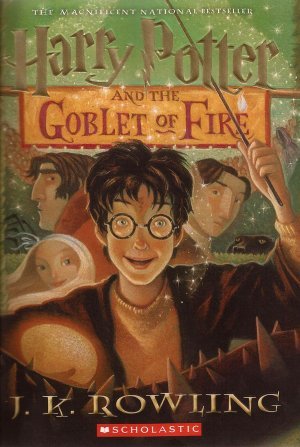
THE JOHN BRUNI MUSEUM OF MEDIOCRE (AT BEST) SHIT #29: REVIEW OF HARRY POTTER AND THE GOBLET OF FIRE


[This was my introduction to the world of Harry Potter. Back then, this was barely on my radar. This was back in the days when religious parents were afraid of the evil, devil-worshipping JK Rowling and her sway over their kids’ minds. I had a reputation for liking weird shit back then. (Heh. Still do.) The editor figured who better to review this book than the fucked up weirdo who might actually be a devil worshipper? And hey! I got the purchase expensed! I didn’t expect much, so this book blew me the fuck away. I hurriedly grabbed the other three books and waited with the rest of the world for the next book. This was in the Elmhurst College Leader, August 18, 2000.]


Every once in a while, a children’s book comes along that appeals to adults, too. For the past few years, JK Rowling has made a living writing books that keep adults and children alike turning pages in anticipation. Harry Potter and the Goblet of Fire (732 pages, Levin Books, $25.95), the fourth in a seven-part series, has been released and has generated so much attention and popularity that bookstores had droves of people showing up to get their hands on the latest exploits of the teenage wizard-in-training, Harry Potter.


This book reads at times like a modern day fairy tale, and at other times like a fairy tale in the darkest traditions of the Brothers Grimm. There’s enough cutsey things for kids to get excited about, like the house-elf Dobby’s odd joy at receiving the gift of socks and Winky’s tendency towards the melodramatic. There’s also Harry’s amusingly fat cousin, Dudley, who ends up growing a huge tongue as a result of eating George and Fred Weasley’s Ton-Tongue Toffey. And, of course, it’s extremely funny to see Mr. and Mrs. Weasley, two wizards, attempt performing Muggle (non-wizard) activities, like sending mail (Mrs. Weasley, not quite sure how much postage to use, covers the envelope in stamps just to be sure) and putting up a tent.


However, there is also a handful of dark, even gruesome, scenes. The book starts out with a scene very reminiscent of HP Lovecraft’s stories (if Lovecraft didn’t have such a powerful understanding of the English language, that is). An old man thought to have been a murderer investigates the house he’s supposed to watch over when someone breaks in, which brings him into a lunatic world with a sentient snake (Nagini), a wishy-washy servant (the aptly named Wormtail), and a thing in a dark chair that calls itself Lord Voldemort, whose oozing, cold voice is reminiscent of Vincent Price’s. When the poor old man finally sees Voldemort (also aptly named), all he can do is scream before he dies.


Unfortunately, such a rich character as Voldemort doesn’t appear again for a long time, but when he does, there’s another vicious scene in which Wormtail, quivering with fear and revulsion for what he must do, is actually forced to cut off his own hand in order to give his master a body.


In fact, there’s a cast of disturbing characters, from the dementors (guards of the wizard prison, Azkaban, who can suck a wizard’s soul out, a fate worse than death) to the enigmatic Defense Against the Dark Arts teacher, Mad-Eye Moody, with his heavily scarred face, half-nose, wooden leg, and rolling magical eye, complete with a lunatic paranoia and a dark secret . . .


There are plenty of things to keep children entertained, from the Quidditch World Cup to the Tri-Wizard Tournament, and the adults will also find themselves grinning with glee through Harry Potter’s most recent adventures. In fact, the only thing that would get in the way of adult readers is the loose, simple writing. Then again, they don’t call it a children’s book for nothing. Adults, don’t be afraid to buy this book, hoping the excuse that “my kid’s been looking for this book” will work. Number one, you’re not alone, and number two, it’s worth it.

Monday, November 27, 2017

THE JOHN BRUNI MUSEUM OF MEDIOCRE (AT BEST) SHIT #28: REVIEW OF OK


[I’m a huge fan of Doc Holliday. I even wrote a short storyabout him that one time. I love Tombstone, The Gunfight at the OK Corral, etc. This book rubbed me the wrong way back then. If I reread it today, I don’t think I’d be so harsh on it. Also, I didn’t know James Ellroy’s writing advice at the time. He said that the author had to know how big each characters’ dicks are. I learned that a few years ago, and I have considered it in all of my work, both the serious stuff and the batshit crazy stuff. This is one of the pieces I wrote for the summer edition of the Leader, Aug 18, 2000 to be precise.]


Doc Holliday was a true, perhaps the only, American Western myth that stood out from the rest.


Men like Wyatt Earp, men with extreme violent tendencies in the name of good, were many on the frontier; you only had to go as far as Morgan and Virgil, two of his brothers, to find another Wyatt Earp.


There were plenty of baby-faced killers like Billy the Kid, and just as many gentlemen bank robbers, like Black Bart.


John Henry “Doc” Holliday was strikingly unique. When one looks at his life, one question rises above all else.


Considering how he was well on his way to becoming a respected dentist in the South, a job that would get him quite a lot of money and prospective wives, he somehow became, as Wyatt Earp once said, “the most skillful gambler and the nerviest, speediest, deadliest man with a six-gun I ever knew.”


How did he go from one lifestyle to the other? Granted, he had tuberculosis, but could that have been all?


Paul West tries to answer this question in his novel, OK (Scribner, $24), giving us a peek into Doc’s mind.


Unfortunately, that is all this book is about. It’s very slow moving, considering all it contains are Doc’s thoughts on this, that, or the other thing. Action is only barely present.


While the book shows how many hours West must have researched Doc’s life (as well as the lives of those around him, including the Earps and Big Nose Kate, Doc’s lady of the night), one of the most important aspects of writing a historical novel is conjecture, and West has no idea on how to do this.


No one can ever know all the facts about an historical event, so many writers who write about the past have to guess at many things. These writers use facts to help them guess about certain issues, but West doesn’t use any evidence whatsoever for his conjectures.


For example, there is no proof that Wyatt Earp had a case of disguises in his closet for when he wanted to do things he typically wouldn’t want to be seen doing, like gambling and paying his respects to the ladies of the night.


While West’s guess at Wyatt’s vanity is pretty well grounded, the disguise thing is pulled completely out of the air.


On that same note, one can question West’s basis for his conjecture that Wyatt kept a collection of dildoes. Again, there was no evidence.


However, when it comes to facts, West is a master. When he describes the gunfight at the OK Corral, he is very historically accurate, right down to persons killed and/or wounded at what time, who said what during the shout out, and who chickened out just after the shooting began.


Another accomplishment of West’s is his ability to disturb readers.


He opens the novel up with Doc walking over to the spittoon to drop a hunk of red matter in it from his mouth. Another scene described later in the book how, at the end of his life, Doc’s lungs were being torn apart by the air from the Glenwood Springs asylum.


Doc spent his last years ridden with sores before the tuberculosis spread to his entire body, tearing everything apart “like some fanatic general wiping out France to make sure of Paris.”


West’s difficulty selecting a point of view proves a bit distracting from the story he is trying to retell, though. OK is written in third person limited, from Doc’s perspective. However, every once in a while, West will switch to omniscient to try out Mattie’s (Doc’s cousin) mind, or maybe Wyatt’s.


Even stranger are his sudden switches to first person to relate his own feelings.


West’s biggest problem, aside from the technical ones, is his undying desire to talk about male genitalia.


There’s not only the instance where he mentions Wyatt’s collection of dildos, there’s also moments when he goes out of his way to describe how whenever Doc ejaculates, it’s tainted red. Even more jarring is the discussion Doc and Wyatt presumably had on foreskins, especially when it turns to the two men tying their erections together with a yellow ribbon.


In an historical book like this, these anecdotes are way out of place and are usually uncalled for.


Thinking about sex is natural, but when it becomes so deeply rooted in your writing that you’re constantly referring to large cumbersome objects as erections, it’s time to visit a shrink.


There have been quite a few portrayals of Doc Holliday: Kirk Douglas in The Gunfight at the OK Corral showed how violent and calculating Doc was. Val Kilmer in Tombstone showed how well-spoken, loyal, and vicious Doc had been. Dennis Quaid in Wyatt Earp excelled in showing how loyal a friend Doc was to Wyatt. All these portrayals are great, but West’s portrayal is easily the worst.


West didn’t even answer the damn question. OK has its moments, but they’re not worth it.